
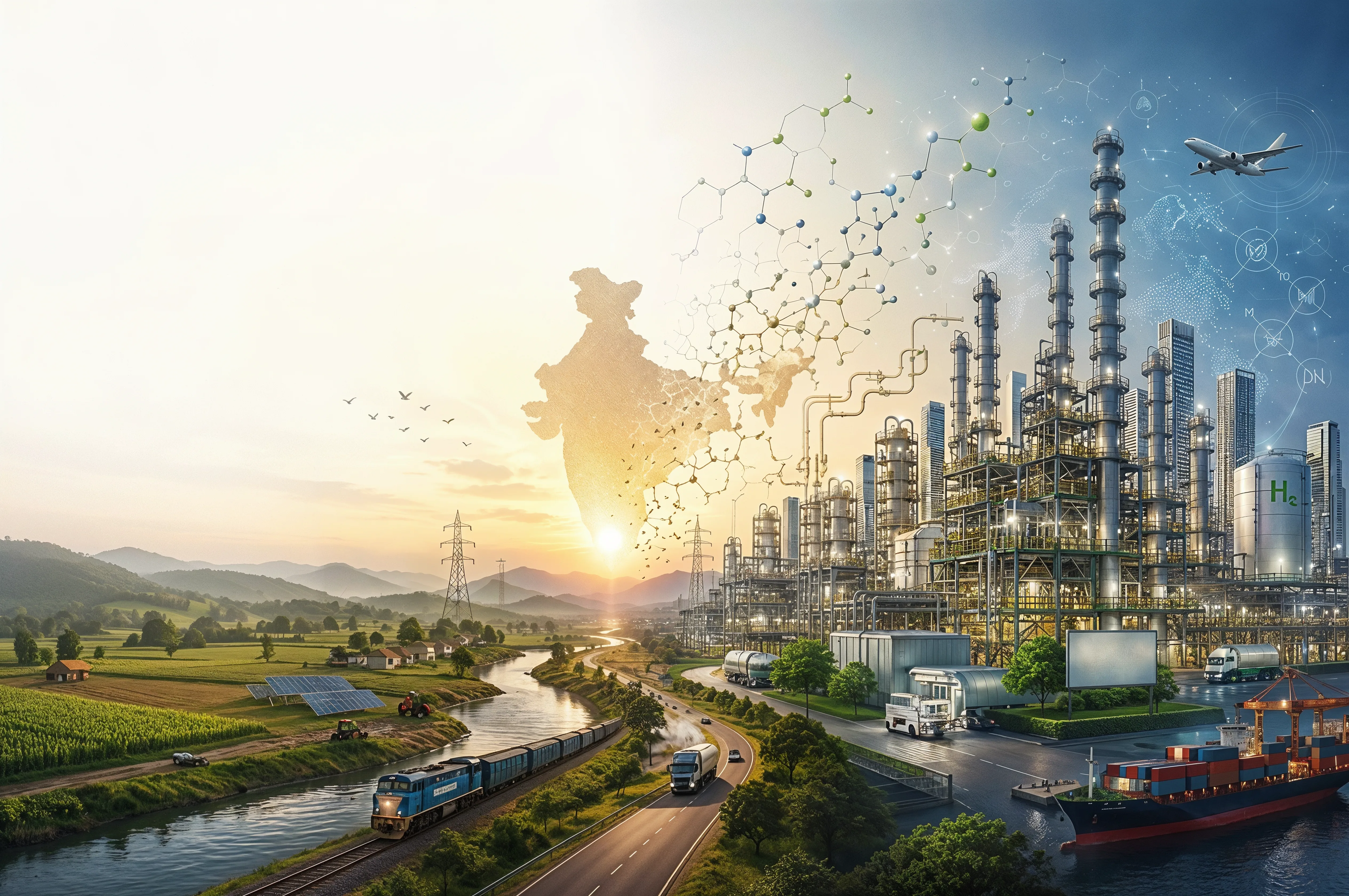
India's landscape, logistics, and chemical manufacturing ecosystem with molecular science visuals

India Today. India Tomorrow. Balaji Amines is Building for Both.

For decades, India’s specialty chemicals industry was largely a buyer of foreign knowledge. Processes were licensed. Products were imported. The country had painfully accepted dependency as a condition of modernity. At Balaji Amines, we thought differently.

Balaji Amines saw something others did not.

India’s future growth would eventually require stronger domestic chemical capabilities — not simply to reduce dependence, but to create resilience, scale and self-sufficiency.

So while demand was still emerging and the landscape remained largely unoccupied, we began building capabilities and capacities for the future of India, as well as expertise we considered urgent at the time.
Balaji Amines stood apart as the unmistakable outlier.

We built India’s first indigenous technology for manufacturing aliphatic amines — not borrowed, not licensed, developed here by Indian scientists and engineers for the Indian industry.

That single act of technological self-determination set the template for everything that followed.

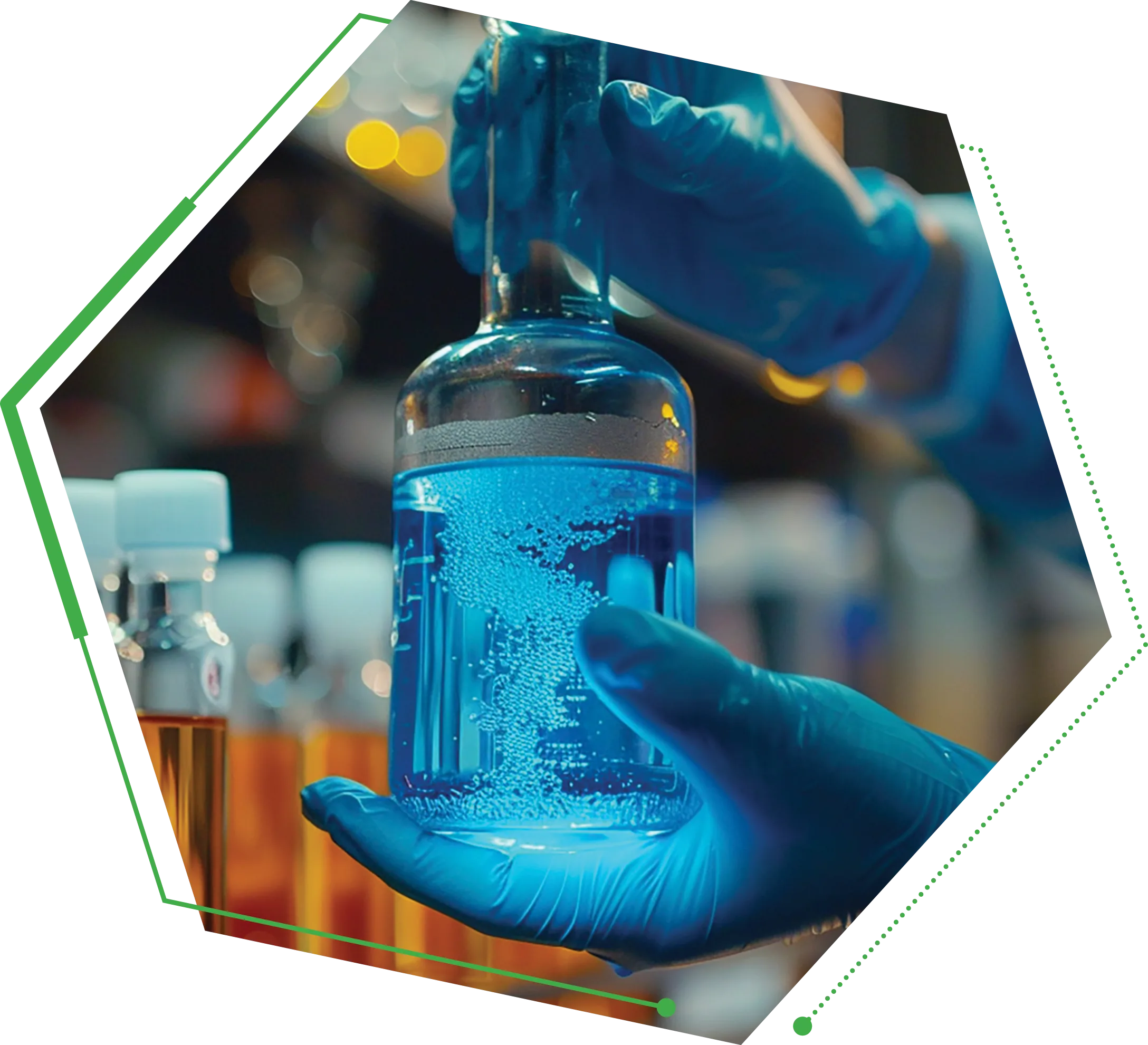
A laboratory flask held by a scientist, representing Balaji Amines research capability

At Balaji Amines, every product we have ever introduced was one India was importing; every plant we have built has made India a little more Atmanirbhar.

India Today – The Solid Proof

Q1 FY26

The MIPA plant was commissioned at Unit I, adding this product that India previously sourced from international suppliers.

Nov 2024

The methylamines plant ran its first full year of contribution — and its effect is unmistakable in our margins.

May 2025

We commissioned India’s first Electronic Grade Dimethyl Carbonate plant, a material at the core of the EV battery supply chain — now made in India, only by us.

India Tomorrow –
The Unwavering Commitment

India, tomorrow is a country

  • .... of 100 GW of solar capacity added annually

  • .... where EV penetration will cross 8.5% of vehicle sales

  • .... where the EV battery manufacturing scales toward a 5x market expansion

  • .... where the pharmaceutical industry is seeking API self-sufficiency

  • .... where the agrochemical sector is scaling toward a USD 12.5 billion market

Every one of these trends needs chemistry.

That chemistry is precisely what Balaji Amines is building for India.

Our ₹750 crore expansion at Balaji Speciality Chemicals Limited (BSCL), granted Mega Project status by the state of Maharashtra, is the most consequential capex programme in our history.

BSCL Unit I, EDA based project producing DETA, TETA, Piperazine, AEEA and AEP — all import substitutes — is expected to be commissioned in September 2026.

BSCL Unit II at MIDC Chincholi, setting for producing Hydrogen Cyanide, Sodium Cyanide, EDTA and EDTA-2Na for the first time in India at a scale, which will be operational during end FY27. These are not incremental additions. They are structural interventions aimed at reducing India’s chemical import bill.

Our Dimethyl Ether (DME) plant — 1,00,000 TPA, commissioned in Q1 FY27 — will complement with the blending program of Govt. of India with LPG, apart from this there are large scale usage in other industrial and aerosol application. Balaji Amines will be India’s only commercial-scale DME producer. This molecule represents Balaji Amines’ entry into India’s energy transition at an industrial scale.

This annual report is a record of India. The India being built. The India Balaji Amines has always been building — before the need became headline news, before the policy caught up, before the market arrived.